Caring for Nature, Sustaining Livelihoods


Strengthening Forest Governance: EcoCare Ghana and Civic Response Empower Community Forest Monitors

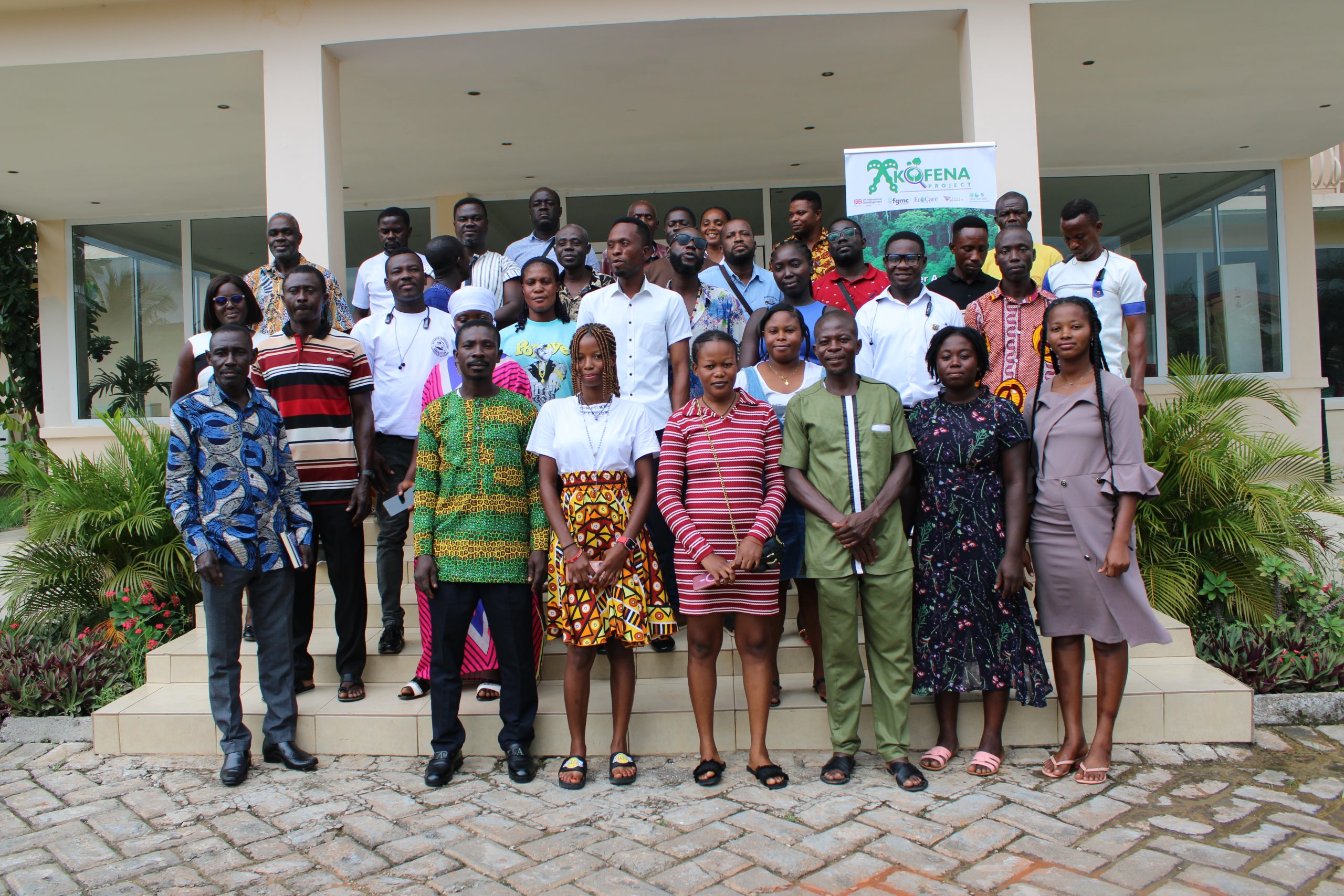
EcoCare Ghana and Civic Response have trained 300 community members from forest fringe communities to serve as Community Forest Monitors, strengthening transparency, accountability, and citizen participation in forest governance.
The training, organised in Accra across six cohorts, forms part of the Holding Power Accountable in Forest Governance through Citizen Engagement (Akofena) Project, funded by the UK Foreign, Commonwealth and Development Office (FCDO) through the Forest Governance, Markets and Climate (FGMC) Programme.
The workshop equipped 300 elected participants from 18 forest districts in the Ashanti, Central, Western and Eastern regions with the skills to use the Natural Resource Monitoring Application to monitor forest activities within Ghana’s Timber Utilisation Contract (TUC) areas.
The initiative responds to concerns raised during earlier community engagements, including illegal logging, limited transparency in timber harvesting and trading, inadequate benefit-sharing arrangements, and restricted access to information on Social Responsibility Agreements (SRAs).
Project Manager Mr. Enock Danso Okyere said the training is designed to strengthen citizen oversight of forest governance by equipping local monitors with the knowledge and digital tools needed to track and report forest-related violations.
‘’By equipping local monitors with the technical capacity and tools to track and report violations, the project will create a stronger system of citizen oversight that complements existing governance structures and supports Ghana’s commitments under the Forest Law Enforcement, Governance and Trade (FLEGT) Voluntary Partnership Agreement (VPA) framework,’’ he said.
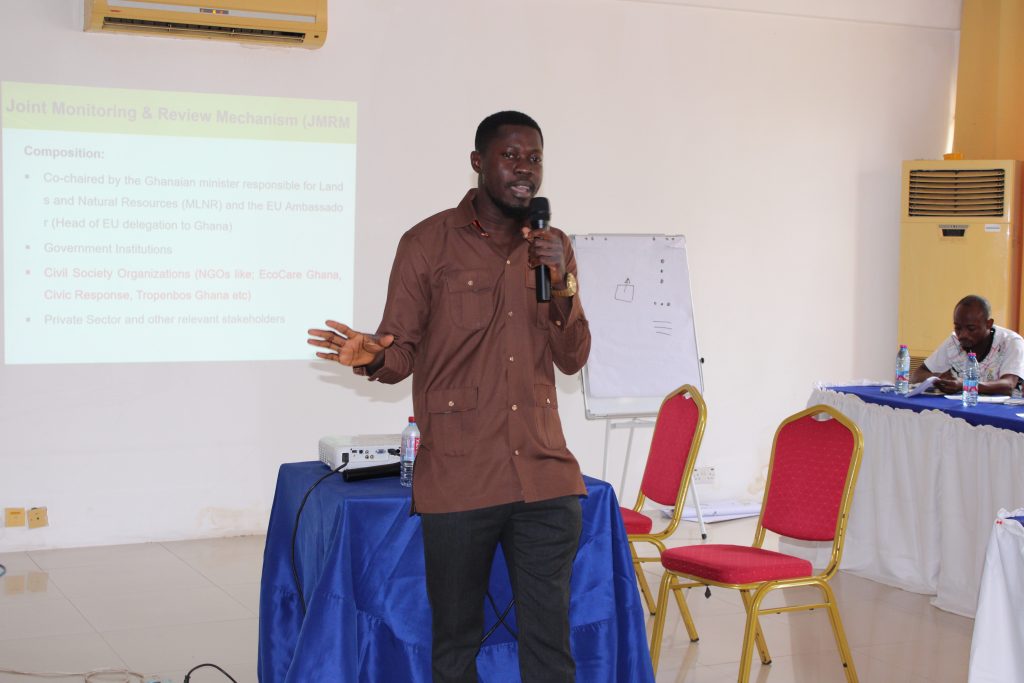
Mr. Okyere noted that the Akofena Project recognizes that sustainable forest governance depends not only on effective laws and institutions but also on the active participation of citizens, particularly forest fringe communities whose livelihoods are directly affected by forest management decisions.
He added that the FGMC Programme’s support reflects the global importance of Ghana’s forest governance efforts. Strengthening community monitoring, he explained, will enhance Ghana’s compliance with the FLEGT-VPA while contributing to international efforts to combat climate change and promote sustainable timber trade.
Delivering a presentation on Social Responsibility Agreements and community rights, Mr. Albert Katako, Head of Programmes at Civic Response, explained that Ghana signed the FLEGT-VPA with the European Union in 2009 to combat illegal logging and promote legal timber trade through the establishment of a Timber Legality Assurance System (TLAS).
Although Ghana has made significant progress towards implementing the agreement, including advancing its timber legality assurance processes, Mr. Katako noted that challenges relating to transparency and accountability at the community level remain.
He explained that the Akofena Project seeks to address these gaps by positioning communities as active partners in forest governance. Through digital monitoring tools and practical training, community monitors will contribute to strengthening Ghana’s Timber Legality Assurance System and reinforcing the credibility of the country’s FLEGT licensing Regime, while ensuring communities benefit from legal and sustainable forest management.
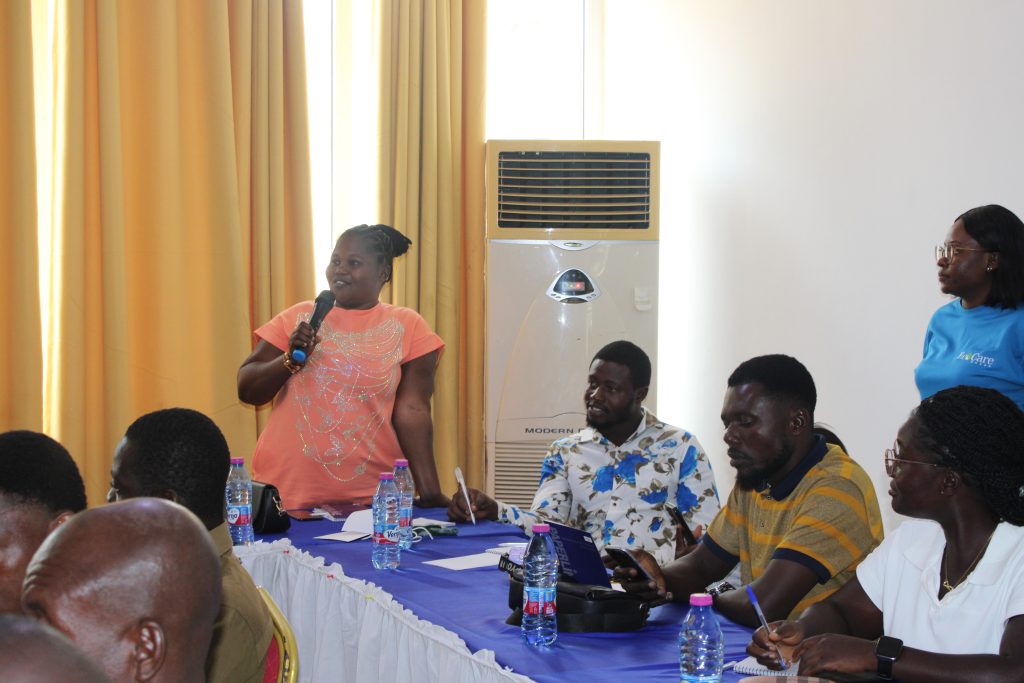
Community members who participated in the training, consistently raised concerns about the limited transparency and accountability in timber harvesting and trade, and the poor implementation of Social Responsibility Agreements, which are intended to ensure that community’s benefit from commercial timber activities. They also noted that the increasing rate of deforestation is caused by illegal logging and mining, continues to threaten Ghana’s forests, undermining biodiversity, environmental sustainability and the livelihoods of forest-dependent communities.
By empowering community monitors to track compliance with SRAs and report violations, the Akofena Project strengthens accountability and advances the FLEGT-VPA’s objectives of transparency, legality and equitable benefit-sharing.
‘’The project is not just about stopping illegal logging,’’ Mr. Katako emphasized, ‘’it is about ensuring that communities receive their rightful share of benefits and that forest resources are managed in a way that supports both livelihoods and sustainability.’’
The initiative demonstrates that sustainable forest governance cannot be achieved by government institutions alone but requires meaningful collaboration among communities, civil society organisations and development partners. By equipping local citizens with the knowledge and tools to hold duty bearers accountable, EcoCare Ghana and Civic Response are fostering a citizen-led model of forest governance that strengthens both national accountability and Ghana’s international credibility.
One participant summed up the impact of the training, saying, ‘’we have benefited a lot from this training. We are ready to protect the forest for future generations.’’