Caring for Nature, Sustaining Livelihoods


Forest Fringe Communities call for Greater Stakeholder Support to Enhance Sustainable Forest Management

Forest fringe communities across Ghana have called for greater stakeholder support to address challenges affecting sustainable forest management and strengthen community participation in forest governance.
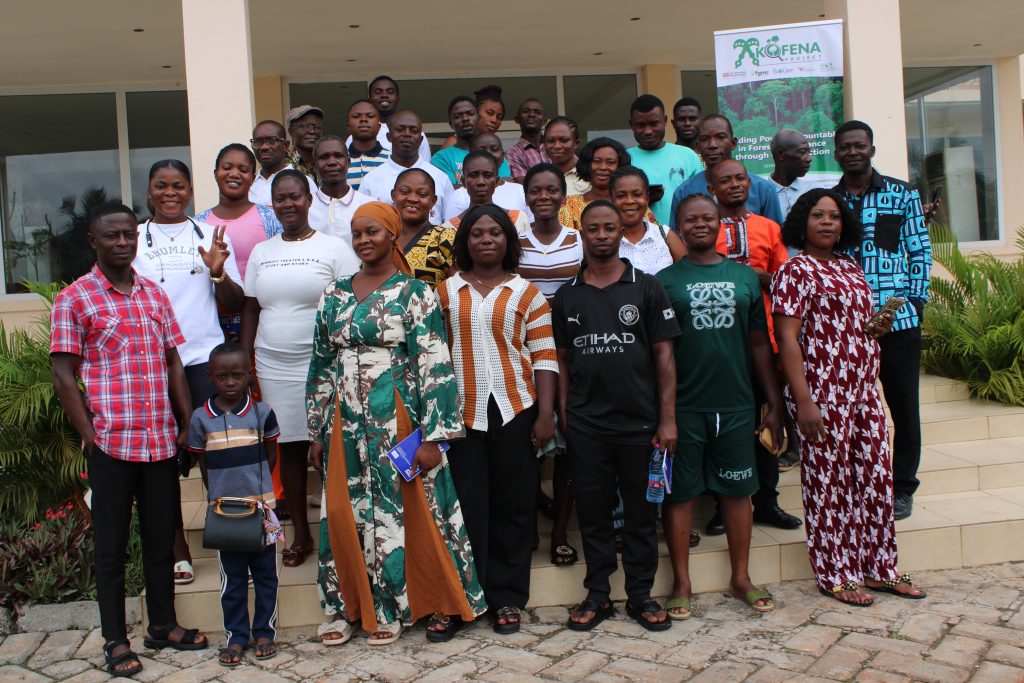
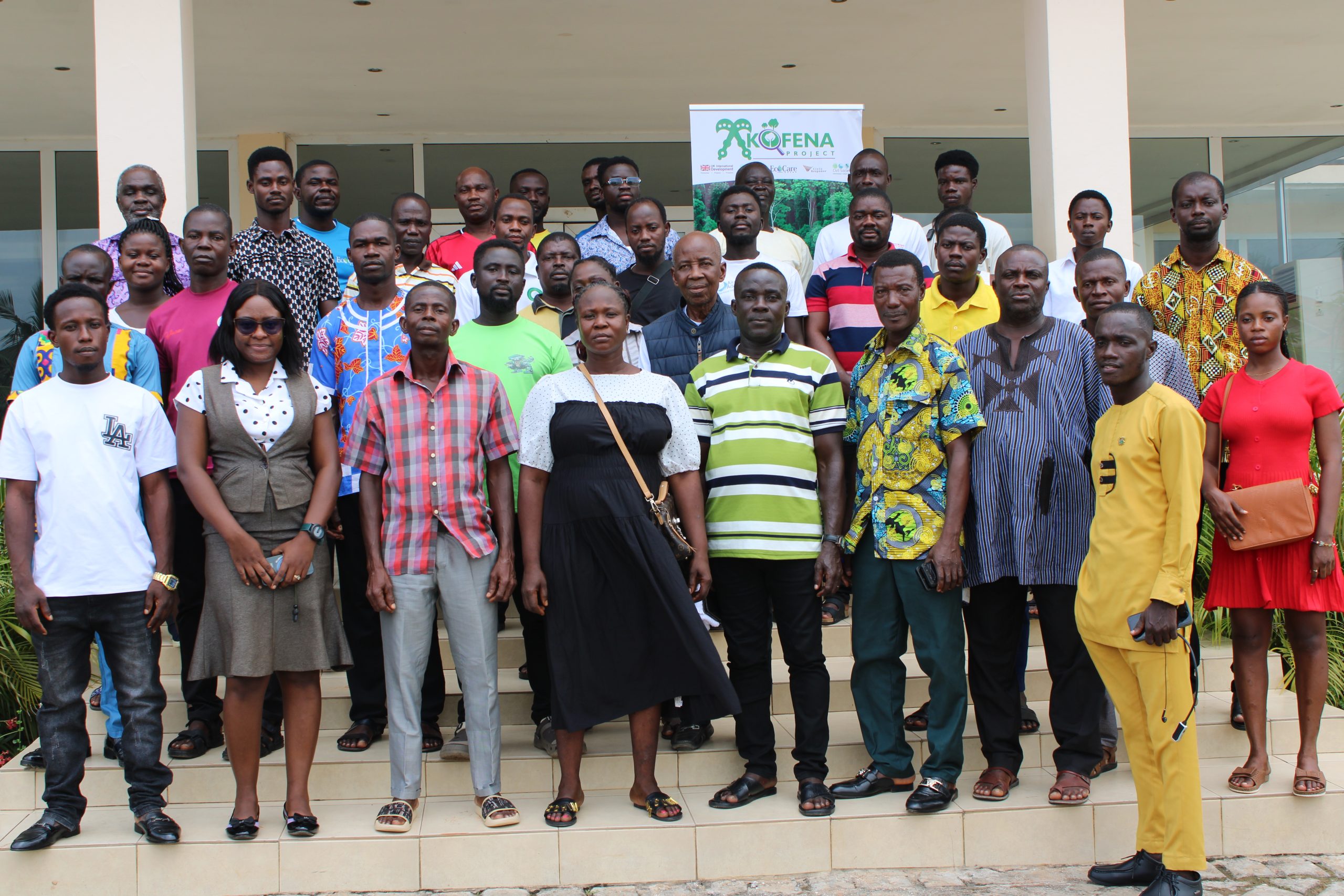
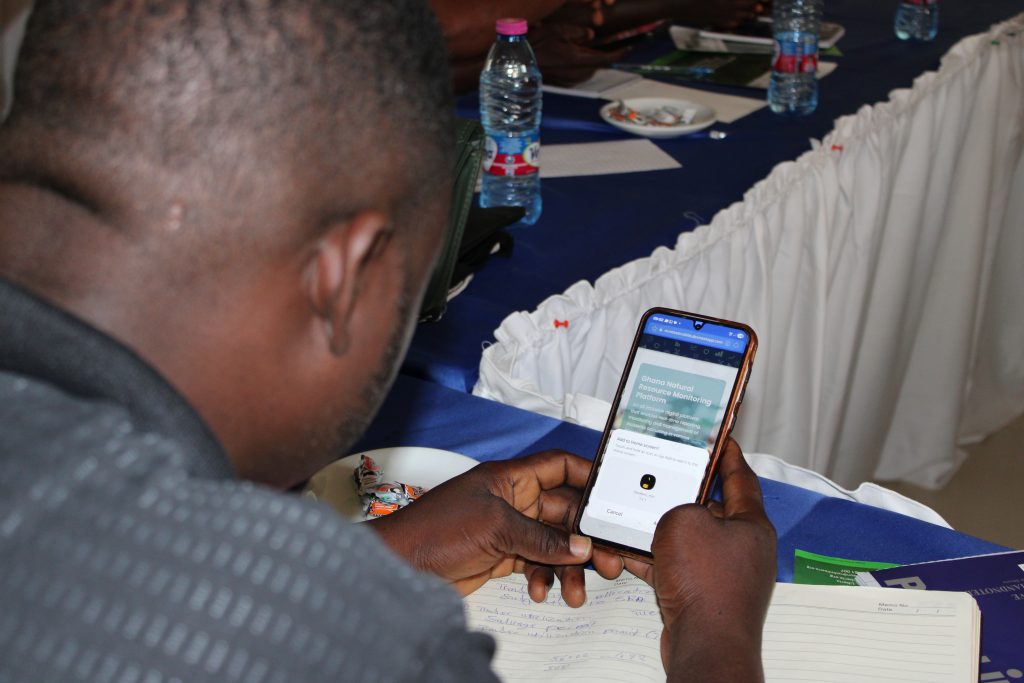
The concerns were raised during a series of training sessions for Community Forest Monitors organized by EcoCare Ghana and Civic Response under the Holding Power Accountable in Forest Governance through Citizen Action (Akofena) Project. The initiative seeks to build the capacity of Community Forest Monitors to support independent forest monitoring and promote citizen participation in forest governance.
The training held in Accra brought together 300 selected community forest monitors from across 18 Forest Districts with Timber Utilization Contracts.
Highlighting key governance and environmental challenges that affect the sustainability of Ghana’s forest resources, participants noted that the 5% stumpage fee allocated to communities as Social Responsibility Agreements (SRA) often falls short of their development needs. They explained that the revenues accrued from SRA are often used to undertake developmental projects in their communities; however, due to the inadequacy of the revenue, most projects remain incomplete.
An Assembly Member for Twifo Canaan, Hon. Kennedy Avornu, suggested that the percentage allocated to communities under SRAs should be increased to enable full completion of intended community projects.
A major governance deficit was that it is difficult for communities to verify whether they are receiving the actual amount allocated to them under the TUC. Others reiterated that they are often left out of the negotiation process when TUC permits are being awarded to contractors and therefore have no mechanism to verify the amount paid to the SRA Committees.
Another key challenge facing forest-fringed communities is the increasing rate of deforestation due to illegal chainsaw operations, illegal mining, and encroachment of forest reserves for farming and other illegal activities. Community members noted that rapid depletion of forests threatens biodiversity, which provides invaluable ecosystem services and supports local livelihoods. Ms. Mavis Nawan, a monitor from Nkwanta in the Juaso Forest District, lamented the extinction of some endemic medicinal plants and animals, leading to the disruption of food and ecosystems.
Participants also expressed concern about the safety of community monitors. “These illegal miners and chainsaw operators are armed, making it risky for us to report illegal activities” said Mr Akwasi Boabeng, from the Nkawie Forest District. They therefore called for stronger security measures and closer collaboration between forestry authorities, security agencies, and local communities to protect those involved in forest monitoring.
Another issue raised was the limited availability of forest guards. While some communities have volunteers serving as forest guards, others appealed for local representation, explaining that some of the official guards assigned by the Forest Services Division (FSD) reside far away from the forest reserves. Community members believe that having guards who live closer to the forests would improve monitoring, facilitate quicker responses to illegal activities, and strengthen community oversight.
These concerns reflect the broader governance challenges that threaten the implementation of Ghana’s Forest Law Enforcement, Governance and Trade (FLEGT) Licensing Regime, which seeks to promote transparency, accountability, stakeholder participation, and legal timber trade. A key principle of the FLEGT-VPA is the active involvement of local communities in forest governance processes.
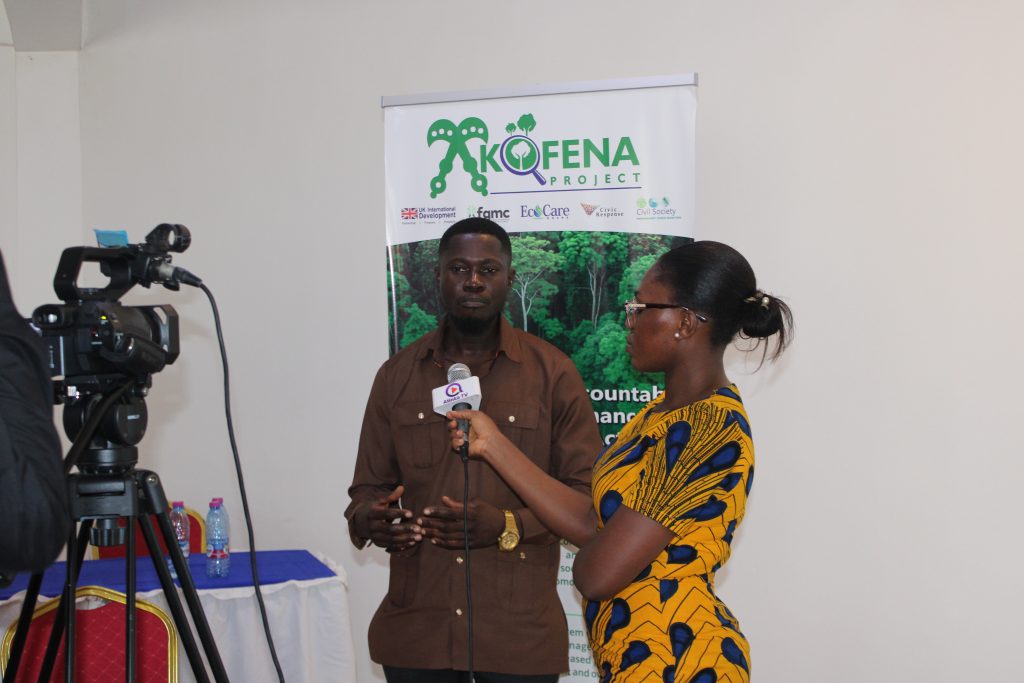
Mr. Enock Danso Okyere, the Project Manager at EcoCare Ghana, during the trainings, stated that, through the Akofena Project, community members will be equipped with the knowledge, skills, and tools needed to monitor forest activities and report violations. “By empowering citizens to play a more active role in forest governance, the project will contribute to stronger accountability and support Ghana’s ongoing forest governance reforms.

The Akofena project is being implemented by a consortium of Partners: EcoCare Ghana, Civic Response and CSIFM Liberia, and is funded by the Foreign Commonwealth and Development Office through the Forest Governance, Markets and Climate (FGMC) Programme.
As Ghana continues its efforts to promote sustainable forest management, community members believe that addressing concerns related to benefit sharing, security, and local representation will be critical to ensuring that forest fringe communities remain active partners in safeguarding the country’s forest reserves. Their calls for greater stakeholder support highlight the importance of building partnerships that place citizens at the center of forest governance.
PICTURE GALLERY