Caring for Nature, Sustaining Livelihoods


A Tree Planted, A Landscape Restored

A Ray of Hope
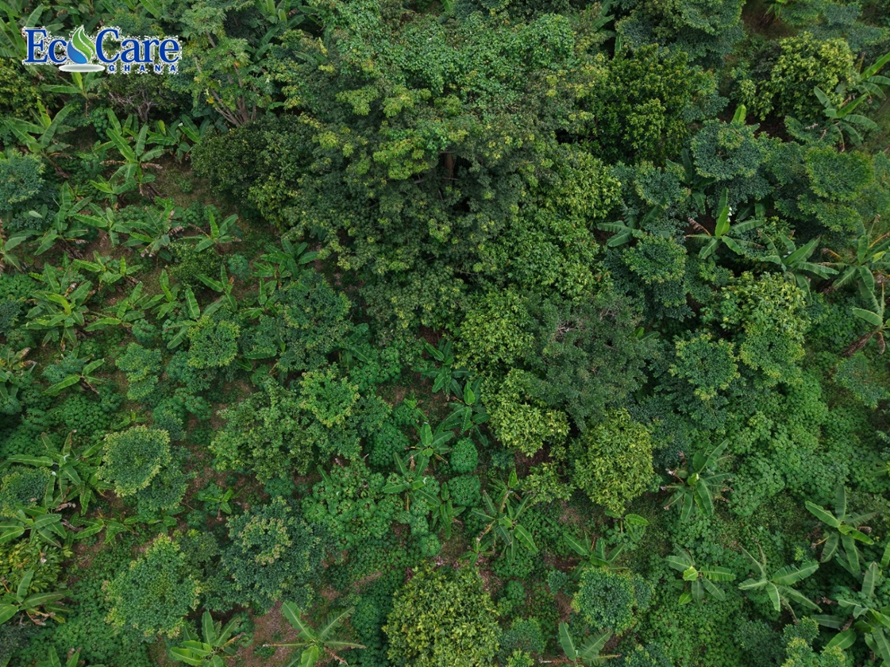
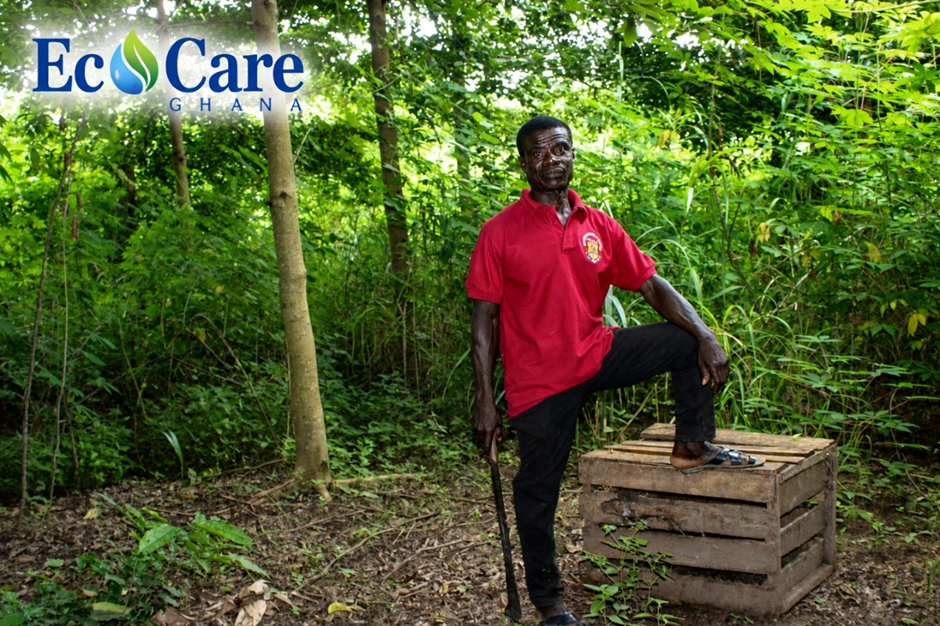
Mr. Osei Kwadwo walks through his farm with the strides of a man who built something invaluable with his own hands, chest up, beaming, as sunlight kisses his face through the canopy formed by the Ofram (Terminalia superba), Emire (Terminalia ivorensis) and Cedrella (Cedrella odorata) trees. Somewhere in the leaves, birds call loudly, butterflies drift gracefully from tree to tree, marking out territories.
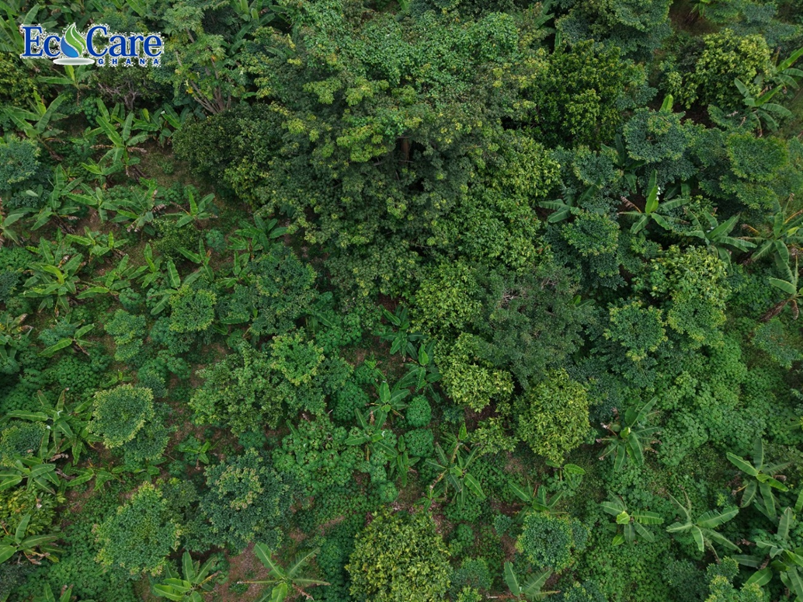
Underneath the dump soil, a millipede crosses lazily, curling itself into a ball the moment human footsteps draw closer, a squirrel looks on curiously, chattering as if upset by the interruption of a peaceful morning by the sound of human voices. Looking around, you would think this 10-acre forest has always been here, it has not.
Hope Fading
Five years ago, the same 10-acre farm told a different story. Where canopy now stands, was a grassland and silence, scattered with stunted pawpaw trees, with miserable-looking fruits that even the bees avoided. Mr. Osei remembers the farm with a sigh of sorrow. “Years of mono-cropping, clearing and burning, pesticides and artificial fertilizers had stripped the land of all its natural nutrients”, he recounted. The sun did not help, it beats down without mercy, turning the rich earth into hardpan. The wind swept through, carrying no relief, only dust and punishing heat, which has become the signature of the changing climate across Ghana’s Transition Landscape. “Everything was suffering”, Mr. Osei says. “The heat, the dryness, my pawpaw trees bore little fruit. That year, I harvested almost nothing, leading to the loss of significant income”.
Mr. Osei was not alone in his loss. A few farms away, Madam Agnes Mensah, a cocoa farmer also from Bonsua, who had intercropped Ofram trees on her farm, watched the adverse impacts of climate change on her crops. Without shade or windbreak, her cocoa trees stood exposed to rising temperatures; the heat was affecting them. “My cocoa trees were dying; the pods were smaller and had few beans”, she recalls. “Sometimes when the cocoa trees blossom, the petals fall off because there were no midges to pollinate them to even become pods. I lost hope and wanted to give up on farming until I heard about the Community Led Restoration Project”.
Across communities in the Offinso South and North Districts and Techiman Municipality, the story of despair among smallholder farmers and communities repeats itself. In the nearby village of Kwapanin, a community that was once surrounded by a lush green tropical forest, stood at the mercy of the elements due to deforestation caused by illegal and over-logging.
Maame Akosua Badwo, a 70-year-old farmer, remembers what stood there before the chainsaw operators came. “You could stand at the edge of the community and see nothing but a dark green thick forest”, she shared. Today, that same view looks like a savannah grassland, the old trees reduced to thin, scattered shrubs. Without the tree canopy to serve as windbreak, rainstorms become something to fear rather than welcome.
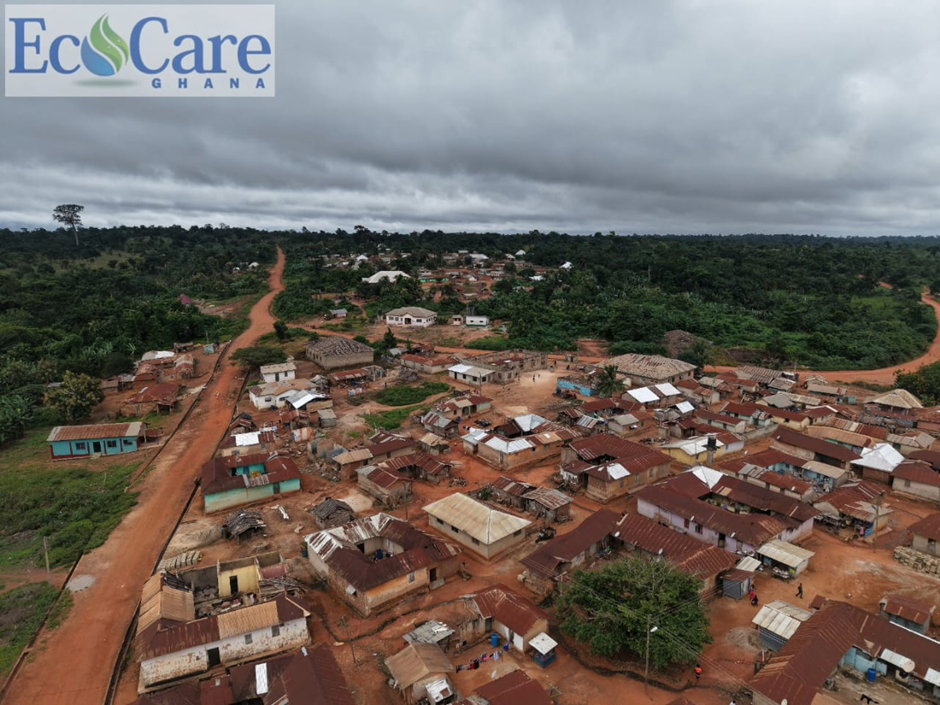
“When the rains come with heavy wind, we lose our roofs”, Madam Badwo says, recalling the years spent rebuilding after each stormy night. The forest also provided other invaluable ecosystem services. “Women gathered wild mushrooms and snails, men hunted grasscutters and antelopes to feed their families and sell for additional income. The trees supplied medicinal plants passed down from generation to generation. When the forest disappeared, so did that quiet reliable economy” she added. The forest used to take care of us, now it is gone, and we have to find other ways to survive, she said with a sigh.
Despite receiving seedlings in the past, farmers were also reluctant to plant due to unfavorable tree tenure and benefit-sharing agreements. We thought the trees planted on the farms belonged to the government, and it can be given for timber contracts without our consent. We had no means to verify and claim ownership, Mr. Badu from Kyebi explained.
Another key challenge, he explained, was the lack of financial support to farmers to help them plant and nurture trees. “Even though, I have large acres of degraded farmlands, I didn’t have the strength to cultivate all, the cost of labour and farm inputs are expensive.
Bringing the Forest Home
It was the realization of the devastating impact of forest loss, the fast rate of the transition landscape gradually turning into savannah, and at the verge of losing its “bread basket” that made the Community Led Restoration Project timely. EcoCare Ghana, through the Terrafund for AFR100, funded by One Tree Planted set out to Plant 300,000 trees across 3 Districts in the Transition Landscape. The project approach was deliberate: restore indigenous and fast-growing economic tree species on degraded farmlands through agroforestry, creation of woodlots, riparian planting, provision of financial support for planting and nurturing, led and owned by communities and farmers.
Community leaders and farmers were deeply involved in the selection of tree species to plant in each community or farm.
“We had received several education sessions on the importance of trees, and had been given seedlings to plant without any consultations or additional support from other initiatives in the past”, Madam Agnes recounted. Those trees were often left to die on our farms because there was no motivation or monitoring. However, the Community-Led Restoration Project implemented by EcoCare Ghana came with a different approach that made us enthusiastic about planting. “We were asked which species originally grew on our lands and given the species we requested. We were also supported financially to clear the lands, buy pegs for planting the seedlings, and maintain our farms and woodlots. The farmers were also supported to register their trees at the Forest Service Division in the various districts, giving them full ownership. “Knowing that I can even leave these trees to my children as inheritance and directly benefit from it in the future gives me the encouragement to keep nurturing them”, she added.
Hope returns: life Blooms
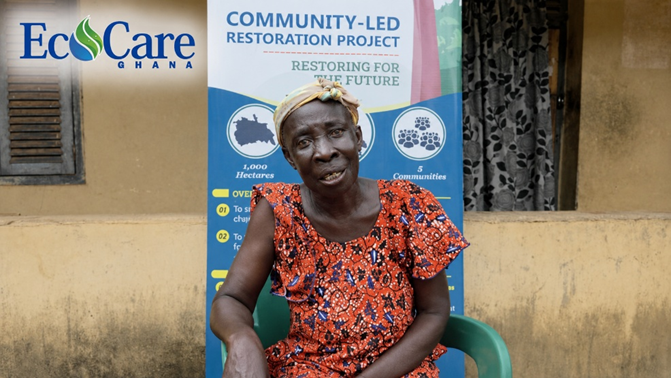
At Kwapanin, this approach worked. The restoration of Ofram, Emire and Mahogany trees that serve as windbreaks, provide medicine and create canopies under which wildlife and human beings thrive. “I feel joyful when I walk through the farm with my grandchildren and teach them the names of the trees and their uses”, Madam Badwo says, smiling and beaming with pride.
On Ms. Agnes’ cocoa farm, the agroforestry approach shows results. Her farm is no longer at the mercy of the sun, the trees intercropped with cocoa now form a mini canopy that shades the cocoa trees and improves the soil’s ability to retain water. The green and yellow cocoa pods hang joyfully on the cocoa trees as proof.
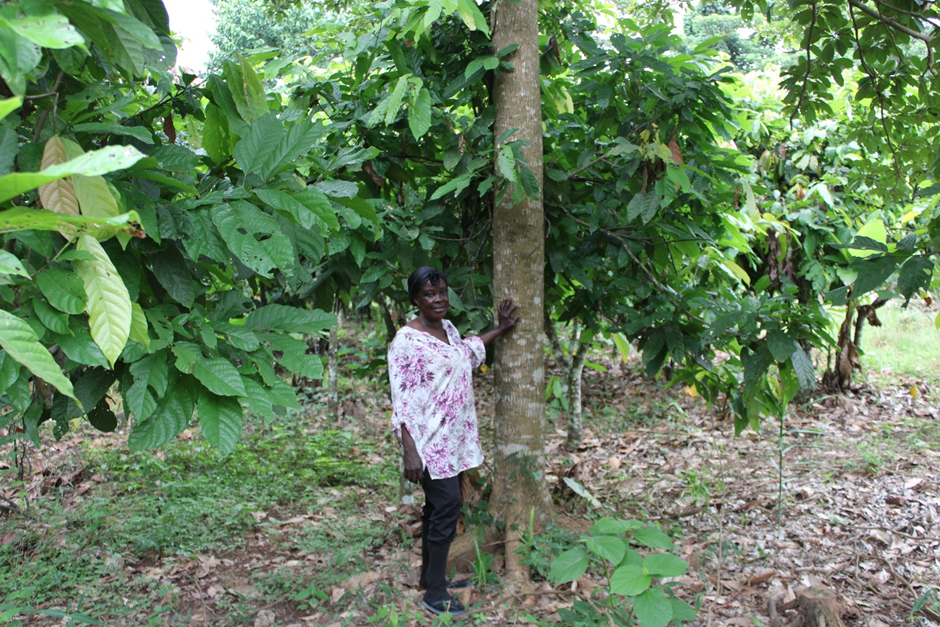
On Mr. Osei’s 10-acre woodlots, Ofram, Mahogany and Cedrella trees have rebuilt an ecosystem: soil held together by roots, moisture retained instead of evaporating, the slow return of birds, butterflies, moths and organisms underneath the canopy and soil.
Perhaps the most significant impact of this project is the renewed hope in the beneficiary farmers and the desire of their neighbors to buy seedling and begin planting on their own. After seeing the changes in my farm, I have been approached by some of my neighbours to help them. Last year, I nursed 2000 seedlings of Ofram which I sold and helped intercrop in their farmlands. Mr. Alidu Seidu, a beneficiary farmer from Anwherekrom iterated.
Most of the farmers who planted woodlots attested to the changing climatic conditions around their farms. It sometimes rain on the restored farms only to find bare skies upon returning home. This small incident points to a fact that trees don’t just survive a changing climate; they begin to shape the conditions around, drawing moisture from the soil, cooling the air and anchoring microclimatic conditions that bare lands cannot sustain.
5 years after the Community -Led Restoration Project inception, over 300000 trees have been distributed and planted by 90 smallholder farmers across 3 districts in the transition Landscape. The outcome of this investment is now visible in every canopy, the returning wildlife, and farmers asking for more seedlings.
In the end, the legacy of the Community -Led Restoration project is captured in the Akan adage of “Sankofa” (Go back and Claim the Wisdom of the past). By restoring the landscape with indigenous species, life is returning to the Transition Landscape, one tree at a time.
Writtten By: Evelyn Addor